


Hydrangea anomala subsp. petiolaris
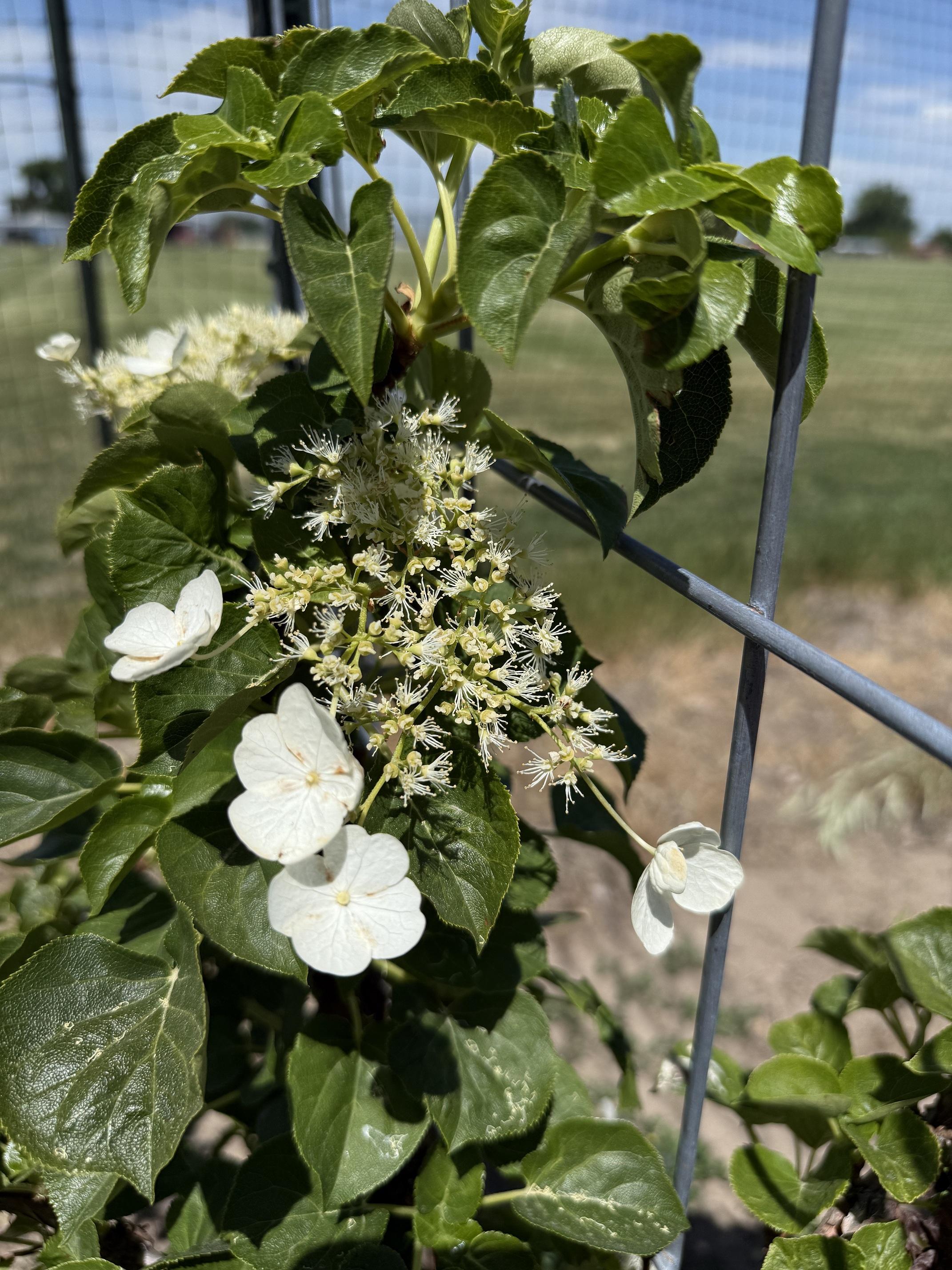
Flowering clusters of Hydrangea anomala petiolaris at USU in June 2025, showing creamy-white blooms.
Summary
Hydrangea anomala subsp. Petiolaris (Climbing hydrangea) is a vigorous, deciduous, woody vine in the Hydrangeaceae family native to eastern Asia, including Japan, Korea, Sakhalin, and parts of China. It climbs by aerial rootlets that allow stems to cling tightly to walls, trees, and other vertical structures. Mature vines typically reach 30–50 ft in length and may grow even larger under favorable conditions. The foliage consists of opposite, simple, ovate leaves with serrated margins that are dark green during the growing season and turn yellow in the fall. In late spring to early summer (May–July), the plant produces large, flat-topped clusters of fragrant white flowers in a lacecap arrangement, with small fertile flowers in the center surrounded by showy sterile flowers. Dried flower heads and reddish-brown exfoliating bark provide additional winter interest. Although slow to establish during the first few years, Climbing hydrangea becomes vigorous once established. It grows best in moist, well-drained soils in part shade to full shade and is hardy in USDA Zones 4–8 (Missouri Botanical Garden), with some sources reporting adaptability to Zones 5–9 (Monrovia). This species is valued in landscapes for its ability to cover walls, fences, and large structures, particularly in shaded environments.
The growth of Climbing hydrangea was minimal across irrigation treatments during both growing seasons. Even under the highest irrigation level (80% ETo), vines had slow vegetative growth and failed to develop significant canopy coverage on the trellis. Only a few plants produced flowers in early summer, and these blooms dried shortly afterward. Most plants did not exhibit a vigorous climbing habit and remained relatively small throughout the trial. Foliage quality was generally poor, with many leaves exhibiting sunburn symptoms during the summer months. As the season progressed, foliage often dried and declined toward the end of the growing season. The limited growth and foliage damage may have been associated with full-sun exposure at the trial site, as Climbing hydrangea typically performs better in partial shade.
Open house participants rated these vines poorly compared with other vines in the trial. Average appearance ratings ranged from 1.18 to 1.80 across irrigation treatments, the lowest among all species evaluated, and the plant received the fewest-favorite votes (27). Overall, Climbing hydrangea performed poorly under the hot, full-sun conditions of the Utah and may be better suited for shaded landscapes with cooler growing conditions.
Basic Info
| Site(s): | USU - Logan, UT |
| Trial Exposure: | Full Sun |
| Year evaluated: | 2025 |
| Reported Height & Width: | 30-50’ x 5-10’ |
| Trellis coverage (after 2 years): | 5% |
| Irrigation recommendation: | High |
Mean Overall Appearance rating: (1-5 Scale, 5 is highest) | 1.8 |
Growth and Quality Data
Click Here for Complete Data Set

Hydrangea anomala petiolaris at USU in September 2024, showing poor foliage quality, sparse canopy development, and dry leaves. Photo: S. Burlakoti

Hydrangea anomala petiolaris at USU in September 2025, showing the whole-plant canopy.